
Integrating E-Government Services
There are several gaps in government services automation that can be identified, and technology can play a significant role in bridging these gaps and creating a more fully integrated system. Some of the most significant gaps in government service automation include:
Many government services are provided by different agencies, each with their own systems and processes. This can lead to a fragmented system that is difficult to navigate for citizens and businesses.
One of the primary gaps in government service automation is the lack of interoperability between different systems and departments. This can make it challenging for different agencies to share data and work collaboratively, leading to inefficiencies and redundancies in service delivery.
Another gap in government service automation is limited accessibility to services for people who do not have access to technology or who may not be tech-savvy. This can lead to a digital divide, where certain groups are left behind and unable to access the services they need.
Many government agencies have large amounts of data but struggle to manage and analyze it effectively. This can lead to delays in service delivery and missed opportunities for improving services.
As government agencies collect and store sensitive data, there are risks associated with cybersecurity breaches and data leaks.
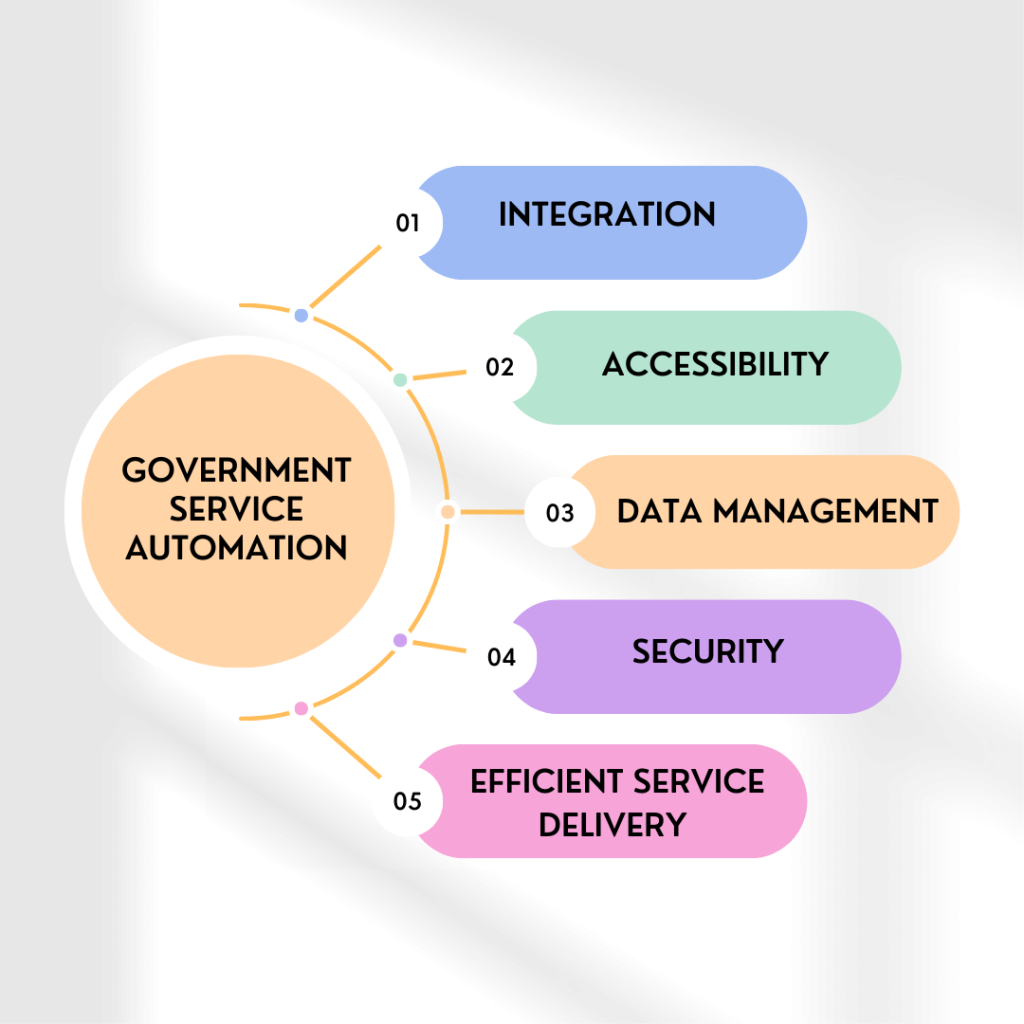
Technology can play a significant role in addressing these gaps in government service automation. Some of the ways technology can help include:
Overall, technology can help create a more fully integrated and efficient government service delivery system, but it is essential to ensure that technology is deployed thoughtfully and with a focus on improving accessibility, data management, and security.